Our Club Meeting Is Monthly Shown Below
SCARS meetings on the 2nd Tuesday of the month at 6:00 p.m. at the Shoneys in Sevierville. we will have the meeting at 6:00 p.m. Tuesday, We meet in the rear dining room, stop by and join us and meet our member, If you have any questions, please let us know. by the contact information .. Thank you and have a wonderful weekend!!!
Tagline
Sevier County Net Preamble
Sevier County Amateur Radio Society Preamble For The Net
This is ( Call WA4SRS) Net Control for the Sevier County Amateur Radio Society 2 meter Net. We will be using this repeater for the duration of the net. This net meets weekly on Wednesday evenings at 7:30 PM local time on 146.850 Repeater of Tim Berry WB4GBI ... The repeater has a sub-audible tone of 118..8 Hz if required, and is located on Bluff Mountain. This is a directed net, so please do not transmit unless directed to do so by net control. You do not need to give my call sign, only yours. Net control asks stations to please use alpha phonetics in their call if possible. This may help other stations understand your call.
Example My call is __, My name is__ and I’m located__.
Is there any emergency or priority traffic?
Are there any club officers with announcements?.
At this time we will take check in's from any amateur radio operator,with or with out comments.
You do not have to be a member of Sevier County Amateur Radio Society to check in,
net is open to all amateur radio operators ..
May we please have a volunteer for next week’s position as Net Control?_________________________________
Is there any further business for the net?
The Sevier County Amateur Radio Society meets the 2nd Tuesday of each month at the Shoney's at the forks of the rivers here in Sevierville TN at 6:00 PM in the back room, All are welcome to attend our meetings, we have a open door policy , check out our website at seviercountyars.info/ ,at this time I will return the repeater to normal amateur operations at_________past the hour.
I would like to thank everyone for your participation in tonight’s Net Session,our repeater owner Tim Berry, be safe, stay well, and I look forward to speaking with you all next week. 73 (sign with your call sign )
If Interested In Becoming A Net Control Please Let Us Know
MONTHLY INFO & EVENTS
OCTOBER 2026
NOVEMBER 2026
DECEMBER 2026
JANUARY 2027
FEBUARY 2027
MARCH 2027
APRIL 2027
Tagline
Your First POTA Activation: A Lazy-Sunday Starter Kit That Just Works
You've had your license for a few months. Maybe you've done some repeater work, chatted on a local net, maybe made a couple HF contacts from your living room. And then somebody mentions Parks on the Air and suddenly you're down a rabbit hole at midnight reading activation reports and thinking — okay, I need to do this. The problem is nobody hands you a checklist that says exactly what to bring and exactly what to do. So let me be that person. Here's the honest, no-fluff starter kit for your very first POTA activation.
What POTA Actually Is (and Why It Hooks You Fast)
Parks on the Air is a program where ham radio operators make contacts from designated parks, forests, wildlife refuges, historic sites — basically any publicly managed outdoor space that's on the POTA list. You log at least 10 contacts from a single park, upload the log, and it counts as an "activation." The other side of that coin is "hunting" — where operators at home work activators in the field.
What makes it addictive isn't the points. It's the combination of fresh air, radio, and the fact that people are genuinely excited to work you. The moment you self-spot on the POTA website and call CQ, you'll have callers lined up inside 60 seconds on a good day. It feels like magic the first time. And honestly, it still feels like magic on your 50th activation.
The barrier to entry is lower than you'd think. You don't need a fancy rig, you don't need a tower, and you don't need to be a CW wizard. A general license, a modest HF radio, and a wire antenna will get you there.
The Radio: Keep It Simple to Start
For a first activation, you want something you already know how to operate under mild stress. This isn't the time to pull out a radio you just unboxed. If you've got a Yaesu FT-891 or an Icom IC-7300 sitting at home, either of those will do the job fine in the field. The FT-891 in particular is a popular portable choice — it runs 100W on a reasonable current draw, it's compact, and the controls are intuitive once you've spent a few hours with it.
If you're budget-shopping, don't overlook the FT-891 used market — they go for around $450-$550 in good shape and are pretty hard to kill. You can also get into QRP territory with something like an Xiegu G90 (about $400 new), which runs 20W and has a built-in tuner that handles a lot of antenna mismatch sins.
One tip that saves beginners a lot of headaches: set the radio up at home the night before and actually transmit into a dummy load. Make sure your audio sounds good, your keyer is set, your power level is where you want it. The park is not the place to discover you've got RF feedback or the wrong mic setting.
The Antenna: Just Bring Wire
A lot of first-timers overthink the antenna. Here's what I'd recommend for your first outing: a simple end-fed half-wave (EFHW) wire antenna, either a commercial one like the BuddiStick or a SOTAbeams product, or a homebrew version you wind yourself. The EFHW runs resonant on 40m (about 66 feet of wire) or 20m (about 33 feet), doesn't need a tuner if it's cut right, and you can deploy it a dozen different ways — sloped off a tree, as a sloper from a 20-foot Jackite or Spiderbeam mast, or even as an inverted L.
For the mast, a 20- to 33-foot fiberglass crappie pole or a Jackite pole works great. They weigh almost nothing, fit inside a backpack, and stake into the ground with a tent stake and a bungie cord. Bring extra bungie cords. You'll always need one more than you think.
The wire itself — if you're winding your own counterpoise or feedline — use 26 AWG or 28 AWG stranded wire for the antenna radiator if you want something light and packable. For any leads that see mechanical stress, step up to 22 AWG. The difference in weight matters when you're carrying it a half mile.
The Power: Don't Get Clever on Day One
Bring a known, fully charged battery. That's it. For a first activation where you're running 100W, a 20 Ah SLA battery will get you through a 2-hour session without drama. Yes, it weighs about 12 pounds, which is annoying. But it's cheap, reliable, and you don't have to worry about cell balancing or charge voltages or any of that on your first day out.
Use Anderson Powerpole connectors if your radio has them — they're the standard in the POTA/SOTA world and make connecting and disconnecting clean. If your radio came with a cigarette-lighter adapter or bare leads, spend the $20 to crimp on a set of Powerpole connectors before you go.
Bring a small multimeter or a battery voltage monitor that plugs into your Powerpole leads. Watching voltage under load tells you a lot — 12.6V at rest and 12.0V under TX is healthy. If you're seeing 11.5V under TX, start wrapping up.
The Log: Paper First, Digital Later
For your first activation, log on paper. Seriously. A spiral notebook and a pencil — not a pen, because cold and wet happen — is bulletproof. The required fields for a POTA log are: date, time (UTC), band, mode, and callsign of the station worked. That's it. You can also add a signal report if you want, but it's not required for upload.
After the activation, you'll enter those contacts into ADIF format for upload to the POTA website. The two most popular logging apps are HAMRS (works offline, great mobile app) and RumLogNG. Many activators use these in the field on a tablet or phone. But if you're nervous about technology failing, paper is the backup that never crashes.
One thing beginners often miss: you need to log the park reference number (e.g., K-1234) in your upload. POTA's website has a "parks" search where you can find the reference for wherever you're going. Look it up before you leave home and write it at the top of your log page.
What to Bring: The Full Packing List
Here's a practical list. Don't overthink it:
HF transceiver (FT-891, G90, or whatever you've got)
20 Ah SLA battery, fully charged, with Powerpole pigtails
EFHW or dipole antenna, pre-measured and coiled
20-33 ft fiberglass mast + stakes + bungies
50 ft coax (RG-8X is a good weight/loss tradeoff for portable)
PL-259 to SO-239 adapter if your antenna has a different connector
Spiral notebook + pencil
Phone or tablet with HAMRS loaded and park reference entered
Extra coax barrel connector — the one time you don't bring it, you'll need it
Coffee. Non-optional.
On the Drive Over
Check the POTA website and confirm your park is on the list and is currently valid. Some parks get delisted or require special access. Also check the POTA spotter network (pota.app) to see if anyone else is already activating the same park — if so, you might want to call it a combo activation, or head to a different park.
Getting Your 10 Contacts
Once you're set up and on the air, self-spot yourself on pota.app. The spot includes your callsign, frequency, mode, and park reference. Within a minute or two you'll start getting callers. A basic CQ call looks like: "CQ POTA CQ POTA, this is November One Juliet Uniform Romeo, portable, activating K-1234, listening."
Keep exchanges short — callsign, signal report, park number. People in the pileup have places to be. After 10 contacts, you've got a valid activation. After 44, you qualify for a "certificate." But don't fixate on a high count on day one — just get the 10, breathe, enjoy it, and decide if you want to keep going.
Most activators find that 40m SSB during the afternoon is the most reliable band for stacking contacts quickly. 20m opens up things geographically but can be quieter on weekdays. If you're running 100W and have a decent antenna, both bands will work.
Watch & Learn
Want to see what an activation actually looks like before you go? These videos will fill in the gaps:
[POTA Tips, Tricks & Hacks for your activation (N1JUR talk)](https://www.youtube.com/watch?v=4eRNNE5tLfw) — a deep dive into the small operational details that make activations smoother
[How POTA is Changing Ham Radio Forever](https://www.youtube.com/watch?v=zXcVsEP977c) — a big-picture look at why the program has grown so fast and what it means for the hobby
[How to Activate POTA Parks the RIGHT Way (N4BFR + AC4SH)](https://www.youtube.com/watch?v=gnFHbwgt6YM) — two experienced activators walk through their setup and operating habits
Go Do It
You're more ready than you think. The gear requirements are low, the learning curve is quick, and the community is absurdly welcoming. Your first activation will probably not go perfectly — something will be loose, the band will be slow for a few minutes, you'll forget to log somebody. That's fine. It's part of the deal, and it makes the 10-contact milestone feel earned.
Ham Radio & Cell Phone Law TN July 1st 2019
Ham Radio & Cell Phone Laws defined !!
Message from your ARRL State Government Liaison, Ingrid Klose, KD4F:
Recently on 1 July 2019 a new law passed by the Tennessee Congress was to prohibit the use of hand held devices
As you will see in the information below and in the link to the newly enacted law, many types of devices including Amateur "Ham" Radio Mobile Devices are specifically exempt.
Over the next couple of days we will work to get distribution to all County EMA Directors, TEMA THP and Local Law Enforcement to comply with the intent of the law as some Amateur Operators have already been stopped for using their equipment in Mobile configuration because of this Law.
Please bear with us as we disseminate this information Section Wide in Tennessee. The following is a format that we Will be asking help to follow through with local EMA director to apprise Local Law Enforcement in their Counties while we look for assistance to provide information to State Law Enforcement Agencies across the Tennessee Section."Tennessee recently enacted Public Chapter Law 412 to promote traffic safety and restrict the use of Wireless telecommunications devices while driving in Tennessee. This new law maintains several of the exemptions which were present in the prior version that applied only to school zones.
"To aid in enforcement, we are requesting you share these exemptions with your County’s Law Enforcement agencies to empower Officers to better enforce the new law. With these exceptions in hand, Officers will be able to accurately enforce the new provisions and avoid generating citations which would later be dismissed due to the exceptions.
Section 1(a)(3): Wireless telecommunications device does not include:
· Radio
· Citizens Band Radio
· Citizens Band Radio Hybrid
· Commercial two-way radio communication device or its
functional equivalent
· Subscription-based emergency communication device
· Prescribed medical device
· Amateur or ham radio device
· In-vehicle security, navigation, autonomous technology or
remote diagnostics
Again ,These devices were expressly exempted from the new law below. We look forward to continuing our ARES partnership together in supplementing the County EMA’s communication needs.
Sincerely,Tennessee recently enacted Public Chapter Law 412 to promote traffic safety and restrict the use of Wireless telecommunications devices while driving in Tennessee. This new law maintains several of the exemptions which were present in the prior version that applied only to school zones.
To aid in enforcement, we are requesting you share these exemptions with your County’s Law Enforcement agencies to empower Officers to better enforce the new law. With these exceptions in hand, Officers will be able to accurately enforce the new provisions and avoid generating citations which would later be dismissed due to the exceptions.
SCARS
Getting Started In Amateur Radio
Here Is What Is Required
Before you can get on the air, you need to be licensed and know the rules to operate legally. US licenses are good for 10 years before renewal and anyone may hold one except a representative of a foreign government. In the US there are three license classes—Technician, General and Extra.
The Technician class license is the entry-level license of choice for most new ham radio operators. To earn the Technician license requires passing one examination totaling 35 questions on radio theory, regulations and operating practices. The license gives access to all Amateur Radio frequencies above 30 megahertz, allowing these licensees the ability to communicate locally and most often within North America. It also allows for some limited privileges on the HF (also called "short wave") bands used for international communications.
The General class license grants some operating privileges on all Amateur Radio bands and all operating modes. This license opens the door to world-wide communications. Earning the General class license requires passing a 35 question examination. General class licensees must also have passed the Technician written examination.
The Amateur Extra class license conveys all available U.S. Amateur Radio operating privileges on all bands and all modes. Earning the license is more difficult; it requires passing a thorough 50 question examination. Extra class licensees must also have passed all previous license class written examinations.
Amateur Radio Code Of Conduct
The Radio Amateur's Code
The Radio Amateur is
CONSIDERATE...He/[She] never knowingly operates in such a way as to lessen the pleasure of others.
LOYAL...He/[She] offers loyalty, encouragement and support to other amateurs, local clubs, the IARU Radio Society in his/[her] country, through which Amateur Radio in his/[her] country is represented nationally and internationally.
PROGRESSIVE...He/[She] keeps his/[her] station up to date. It is well-built and efficient. His/[Her] operating practice is above reproach.
FRIENDLY...He/[She] operates slowly and patiently when requested; offers friendly advice and counsel to beginners; kind assistance, cooperation and consideration for the interests of others. These are the marks of the amateur spirit.
BALANCED...Radio is a hobby, never interfering with duties owed to family, job, school or community.
PATRIOTIC...His/[Her] station and skills are always ready for service to country and community. For You DXer's ....
I will listen, and listen, and then listen again before calling.
I will only call if I can copy the DX station properly.
I will not trust the DX cluster and will be sure of the DX station’s call sign before calling.
I will not interfere with the DX station nor anyone calling and will never tune up on the DX frequency or in the QSX slot.
I will wait for the DX station to end a contact before I call.
I will always send my full call sign.
I will call and then listen for a reasonable interval. I will not call continuously.
I will not transmit when the DX operator calls another call sign, not mine.
I will not transmit when the DX operator queries a call sign not like mine.
I will not transmit when the DX station requests geographic areas other than mine.
When the DX operator calls me, I will not repeat my call sign unless I think he has copied it incorrectly.
I will be thankful if and when I do make a contact.
I will respect my fellow hams and conduct myself so as to earn their respect.
Having wonderful tools at your disposal does not abrogate your responsibility to operate in an unselfish manner. You must still be courteous to your fellow Hams. .....
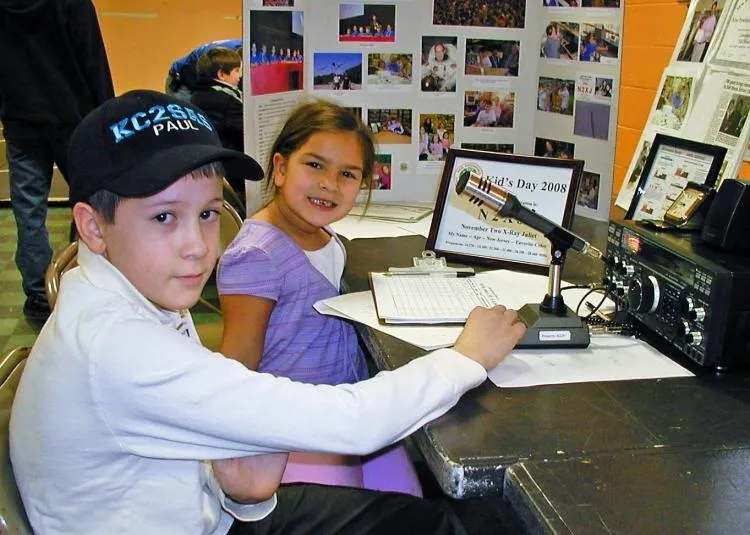
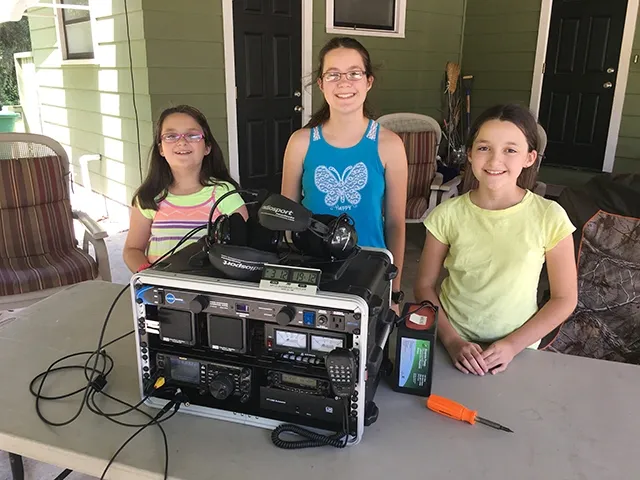
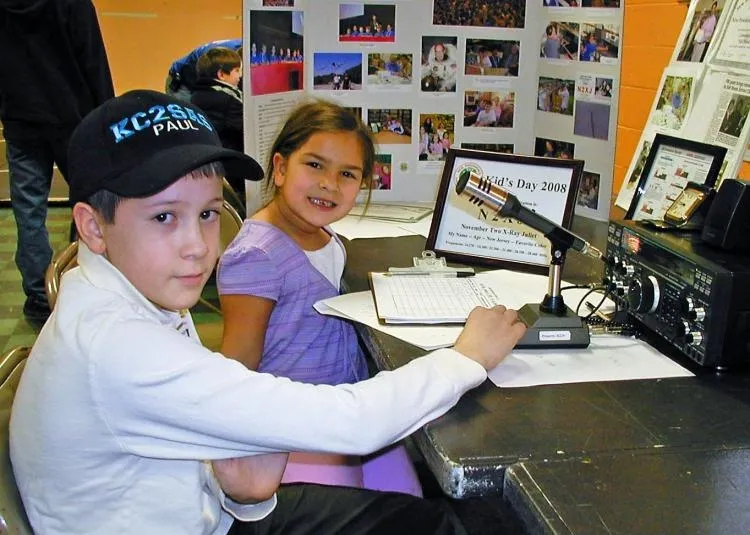
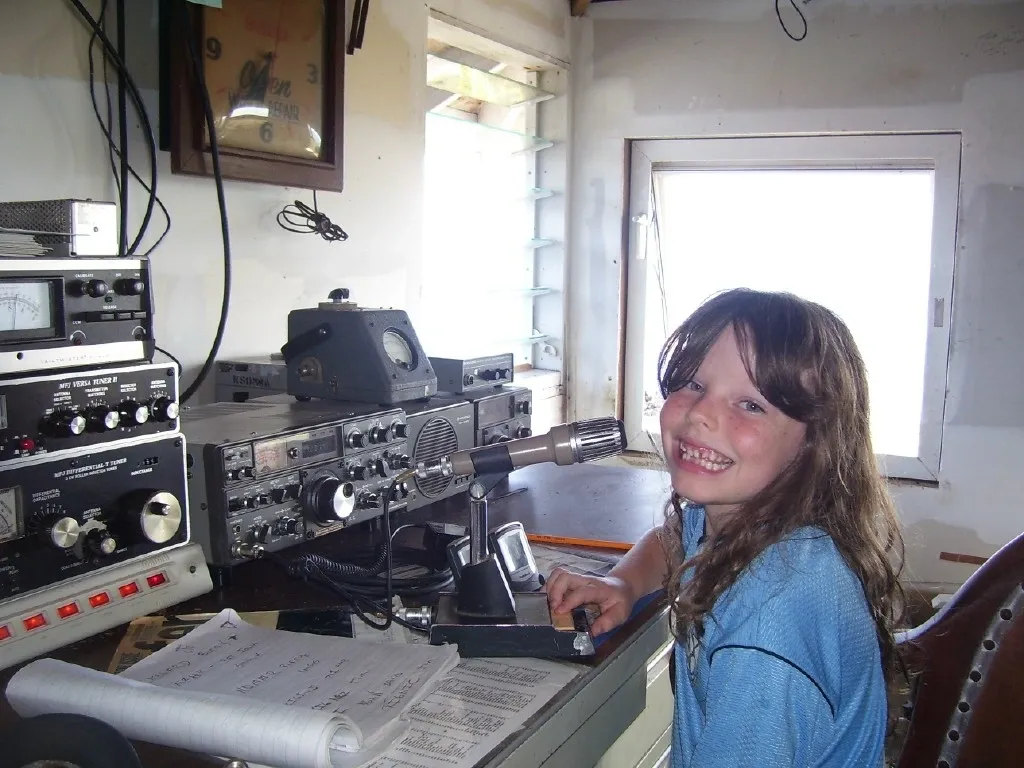
Getting Our Youth Involved In Amateur Radio
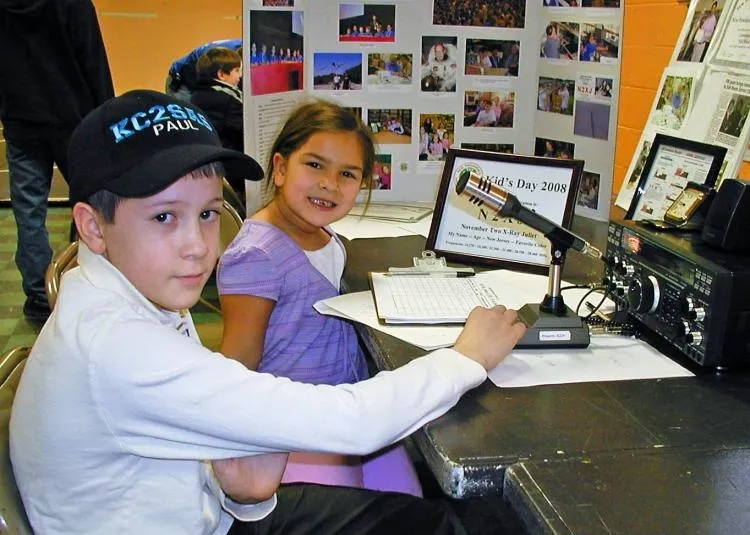
As with any organization, younger participants are needed to replace aging members and to grow an entity. Until the 1980s, amateur radio was almost automatically attractive to youth because it offered access to cutting edge technology. However, with the advent of the personal computer, the internet and video games, many of the youth who might naturally have gravitated towards amateur radio are finding hobby and potential career satisfaction from newer technologies. The allure of distant communications via radio has been replaced by inexpensive global access through home computers for the price of a basic subscription. Such changes should give today’s amateur radio operators pause as to how to make amateur radio exciting when talking to youth.
If we examine the basic tenets of amateur radio, there are still many attributes which youth can find attractive. There remains the thrill of distant communications, the challenge of reaching a goal under adverse conditions, the freedom to experiment and the opportunity to engender good will among nations and to serve as a patriot to your own country in times of crisis. Amateur radio is also one of the few licenses available without a minimum age requirement. Yet, it is also a license that must be earned by demonstrating knowledge, much like a drivers license. Thus you can appeal to youth that the format for earning an amateur radio license is much like what children will face to get a driver's license.
There are multiple objectives in speaking to youth. The first is to gain recruits, but the reality is that statistically only a handful will ever step forward on their own to pursue a license. Some will be fascinated enough to pursue careers in fields allied to amateur radio, such as computer sciences. A presenter may never know that his or her presentation provided the stimulus to explore careers in a related area. For the majority of youth, the message will likely be that amateur radio has been a vital link in the development of today’s electronic technologies, that amateur radio operators provide crucial community services during disasters, and that those who are in the hobby seem to have genuine fun. The most we can expect from the majority of youth a speaker reaches is to leave them with a positive and favorable impression which will remain with them into their adult lives. Now that expectations are set, it doesn’t mean that you don’t give your presentation your all.
Safety & Security Of The Hamfest
Hamfest Policy & Disclaimer
Inside dealers, exhibitors, outside tailgate participants and others are to follow the following rules and all procedures as listed below by The Sevier CountyAmateur Radio Society, including those stipulated by Sevier County Fairgrounds , at the site for the event.
** All inside dealers, exhibitors and outside tailgate participants are fully responsible for collecting and
reporting all federal, state and local taxes (as applicable).**
** Smoking or vaping is not permitted inside the facility utilized for the Hamfest event or with 25 feet of any entrance.**
**The sale of inappropriate items such as knives, guns, explosives, dangerous chemicals, unlicensed
software, videotapes, etc., pornographic materials and other items that are inappropriate shall not be
exhibited or offered for sale. Sales of CBD products, vaping equipment, vaping fluids shall not be sold on the Hamfest site.**
** Packaged items for personal protection (stun guns and pepper spray) shall be allowed subject to
following local laws, and Tennessee regulations on sale of such items. In addition, these items shall , not be sold to persons younger than age 18.**
** Animals are prohibited inside except for service animals for the disabled or medical alerts. **
**Exhibit tables ARE NOT TO BE MOVED or reconfigured except by Hamfest volunteers under the
direction of the Sevier County ARS Staff , Limit table loading to 175 lbs.
SAT ON OR STOOD ON. Boneyard tables are not provided by SCARS, you must furnish your own tables, chairs, and tents for the BONEYARD ! **
Neither the Sevier County ARS, Staff or club members, or the Sevier County Fairgrounds,shall be held responsible for any warranty or the condition of items sold by either by the inside dealers, exhibitors or those in the outside tailgate area.**
** Dealers and outside tailgaters shall not leave unsold merchandise, boxes, and other trash upon their departure.**
** No outside electrical outlets will be available in tailgate area.*
NO WEOPONS ARE PERMITTED EXCEPT FO NIGHT SECURITY OR POLICE OFFICERS !!!
NEWSLINE
Amateur Radio Newsline
Amateur Radio Newsline™ produces a weekly newscast of interest to radio amateurs worldwide. The bulletins conform to all sections and codes as outlined under the United States FCC Part 97 Amateur Radio Service rules regarding the legal means of amateur radio operators issuing “QST’s” or “Bulletins of Interest to All Amateurs.” We differ only in format and follow a more traditional radio “spot news” format. Whenever possible, we attempt to bring you the voices of those in the news. https://www.arnewsline.org/
GMRS & HAM RADIO
WHAT IS GMRS
Amateur Radio is a great hobby, with many modes of operation, and during a emergency Ham Radio Is there, but did you know also there is another radio system, and many Ham's are using as well !
What GMRS Radios To Use & When ...
The General Mobile Radio Service (GMRS) is a "licensed required" land-mobile FM UHF radio service that was originally in its intent designed for short-distance two-way communication (Apparently "short distance communications" has been removed from the language within the GMRS FCC rules). It requires a license issued by the FCC for the use of the GMRS Channels as allocated by FCC in the United States.
FCC permits use by individuals (licenses are issued to individual adults age 18 years of age and older) who possesses a valid GMRS license. In addition to this licensed individual who is authorized to use this license, other individuals (even those under 18 years of age) with permission of the licensed holder, such as his or her immediate family members, are allowed to use same said license. Per FCC, "family members" includes a spouse, children, stepchildren, parents, stepparents, siblings, grandparents, aunts, uncles, nephews, nieces, and in-laws (see 47 CFR 95.179).
Immediate relatives of the GMRS system licensee are entitled to communicate among themselves, or with other licensed GMRS users, regardless of location within the United States. Non-licensed individuals may place a base, control, or repeater station in operation anywhere within the United States but only licensed holder and approved individuals as approved by the hold may actually transmit on said GMRS base, control or through a repeater for personal or business purposes. Employees of the licensee, who are not family members, are not covered by said same license.
GMRS radios are typically, base, mobile, repeater, and hand-held portable devices. These base, mobile, and hand-held radios, unlike Family Radio Service (FRS) radios, and share some of the FRS frequency band near 462 and 467 MHz. Unlike FRS radios, hand-held radios are allowed to have detachable antennas. Mobile and base station-style radios available are normally commercial style UHF radios as often used in the public service and commercial land mobile bands. These are legal for use in this service as long as they are GMRS type-approved. Many public service and commercial radios manufactured prior to 2005 are type-approved/accepted for GMRS use.
Did you know Tim has a repeater up and running also! Has great coverage and super operators on as well,
Over the past years, due to disasters, parades, and other local functions, community leaders and law enforcement have had to ask its local community members to help with assistance in the aid or delivery of services of their community. At times it may become necessary for community leaders (including law enforcement) to ask others in the community to help provide additional communication when all other communications are stressed or stretched to the max and/or even not working. In a majority of the times when additional communications have been required Amateur radio operators will usually provide additional assistance with local, state and nationwide communications when called upon, but, they are not the only ones that can. GRMS licensed users can do the same. Amateur radio operators are not always available in all areas of the United States. In such places, GMRS licensed users and FRS radio operators can fill that gap. In addition, there are generally, nowadays, just as many if not more users of GMRS and FRS radio equipment than there are Amateur radio operators.
Like the Amateur radio operators, GMRS licensed user have been forming a relationship with other like GMRS licensed users in around their local areas. Some have even formed clubs for the training and sharing of GMRS information just like Amateur's have. Since many GMRS users have obtained a GMRS license before they obtained their Amateur radio permit, and vice-a-versa, many are familiar with how the advantages of additional communication can be of benefit to their communities. But like anything else, if your communities leaders are not aware that you have your license and radio equipment than you really won't be called upon. It is up to you, now that you have your license, to make contact with your community leaders and specifically your local County/City Emergency Management Coordinator (EMC) to introduce yourself and let them know what you have, how often you can be available and what service(s) you can offer to them. Even if you have an EMC and he/she tells you they won't need your services or shows that they are not interested in talking with you and getting your information then contact your County Judge or Mayor and advise them of the response you received from the EMC so that they can be aware of your offerings and maybe so they can change the attitude of your EMC.... We all have capabilities and services we can provide to our communities, don't let one person or community "leader" convince you of otherwise....
https://www.facebook.com/groups/150286209016264/?epa=SEARCH_B
HAMFEST REMAINING IN 2026
UP COMING HAMFEST TO ATTEND
DAYTON HAMVENTION MAY 15 -16-17
ATLANTA, GA IN PLANNING STAGE 2026
(JUNE 6TH )
KNOXVILLE,TN ( RACK CLUB ) JUN 13TH 2026
HUNTSVILLE, ALA AUG 22-23 2026
LAKEWAY HAM FEST SEPT 12TH, 2026
STONE MOUNTAIN HAM FEST NOV 7TH AND 8TH , 2026
SURECOM
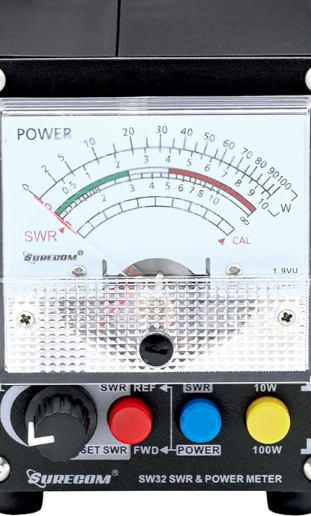
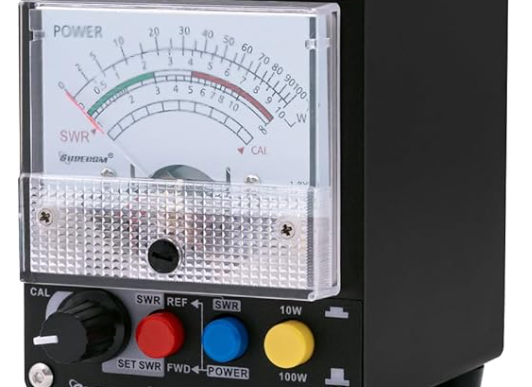
Mcbazel Surecom SW-32UV 125-525MHz 100Watt SWR & Power Meter Black
About this item
- Large meter display for easy reading.
- Forward RF power readings, switchable to indicate either average power
- Reflected RF power readings.
- VSWR ratios.
- Convenient control for easy operation.
- $55.99 Was Tested With Bird Meter Right On The Money !!
Receiver Test Data
SHERWOOD ENGINEERING
http://www.sherweng.com/table.html
Sorted by Third-Order Dynamic Range Narrow Spaced - or- ARRL RMDR (Reciprocal Mixing Dynamic Range) if Phase Noise Limited
The term RMDR has only existed since 2012. To convert column LO Noise to RMDR, subtract 27 dB. Example: an LO Noise of 127 dB would be an RMDR value of 100 dB
Note: The term blocking only applies to a superhet radio. For a direct sampling radio the value in the blocking column is the ADC overload point reference receiver noise floor.
Updated 03 March 2026. Added Icom IC-7300Mk2 Second Sample
GREAT SITE TO CHECK ON HF RADIO SPECS
Tagline
Miklor 2026
Radio Support & Information Site
Since 2012
Quick Links: Gen'l INFO CHIRP DMR Antenna HAM Manuals Technical Programming
THIS IS A GREAT WEBSITE BY JOHN, VERY INFORMATIVE
https://www.miklor.com/#PROGRAM_Section